
It’s the reality in most secondary ELA classrooms with heterogenous populations that you’re going to have some students finish their assignments earlier than others. What do you usually have these students do?? Most ELA teachers will say, “I just have them read,” but if you want to kick it up a notch with some ideas for educational activities that are ELA-oriented, here’s a list of activities that I have my students can choose to do, should they finish early.
I should note that I do give small class rewards for students that complete any of the following activities, since they are considered “extra.” My choice of reward is usually a class coupon. You can find easy ideas for class rewards here with this resource, most of which require no extra spending on your part!
1. Book Activities
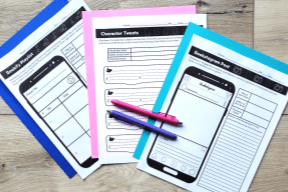
In my classroom, students have at all times a book of their choice that they’re reading for the current quarter. Instead of having students complete traditional boring old reading logs that most they usually fake anyway, I have them complete activities of their choice that showcase their understanding of the book AND their creativity! There are 10 activities in total both in print and digital formats (it’s awesome not having print countless amounts of these activities.)
Some of these activities include creating a playlist, an ode, a snapshot, and a “bookstagram” post. The playlist is always a hit with the students. On a side note, I always groan at how old I feel when I don’t recognize ANY of the artists 😓
2. Roll a Story Activities
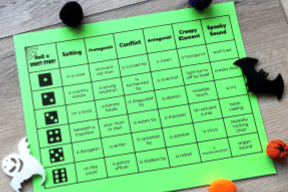
This resource is fun for stretching students’ creative writing skills. All you need to do is print a provide dice for these fun and engaging activities! This resource comes in two versions: you can have students generate a spooky story or a dramatic love story (great for the holidays). There are plenty of ideas here for students to choose from, but if you want to add more of your own spin, both resources are editable so you can customize any way you want.
How it works: Students roll a die to get ideas for a random setting, protagonist, conflict, antagonist, adjectives, and more. (Pro-tip: Use this link for digital dice so that the dice aren’t rolling all over the place causing a ruckus!) Then, they put it all together in a unique story! I usually have students type their stories out and bold the places where the ideas generated from the mats appear. If we have time, it’s really fun to let students share these out loud!
3. Figurative Language Mazes
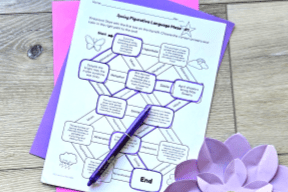
These fun activities are perfect for any holiday or season and great for figurative language review. How it works: Teach or review the figurative language terms with students using the provided review sheet. Then students trace the correct figurative language terms through the mazes by matching the examples. Each resource comes with an answer key so it’s easy for them to check their answers.
To increase the challenge, each resources comes with blank maze so students to create and/or find their own figurative language examples. Have them trade the mazes with classmates or have them work on them together, creating an interactive learning experience. Or create some competition by having them race each other to finish!
4. Mad Libs
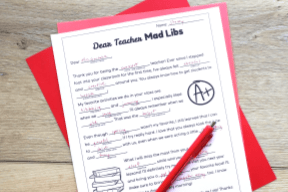
Mad libs are always a hit with my students, no matter how old they are. I have created mad libs for every holiday so that students are always have a relevant mad libs to try!
How it works: students first fill out the parts of speech table with silly choices. Verbs and adjectives are included for help. Then, they transfer their answers to the story. Students can read their stories to each other or to the whole class for a good laugh. My students’ all-time favorite mad libs is the Love Letter + Break-Up Letter Mad Libs, so fun for Valentine’s Day!
5. Tarsia Puzzles
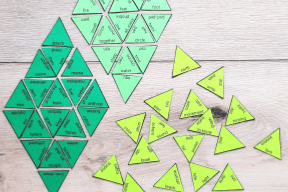
Everyone likes a good puzzle. Giving students a chance to manipulate pieces with their hands gives them an opportunity to make connections and discoveries on their own. These Tarsia puzzles are unique puzzles because all the pieces are the same exact shape. Students work to match the triangle sides with the term to its definition or example. Lists of the answers are also included.
Tarsia puzzles can also be fun with partners or groups! Have students compete to see who can finish their puzzles the fastest. I have Tarsia puzzles for Greek and Latin roots, Synonyms and Antonyms, and Parts of Speech, so there’s sure to be something students need to review!
How do you keep your early finishers engaged? Let me know in the comments below!
Stacey
 ©Exceptional ELA