
October is the perfect time to lean into the spooky side of literature. Middle and high school students love a good chill, and spooky stories offer just the right mix of suspense, intrigue, and teachable moments. Whether you’re looking for classics that pack a literary punch or a creative activity that gets your students writing, these five spooky picks will keep your classroom engaged all month long.
1. The Tell-Tale Heart by Edgar Allan Poe
I’ll never forget the first time I heard a Poe short story in eighth grade. My teacher read his words aloud, and the room seemed to shrink with every heartbeat and shadow. That moment lodged itself in my memory, and ever since, I’ve tried to recreate that same spellbinding experience for my own students—leaning into the drama, the pauses, the chills that only come when a story is truly heard.
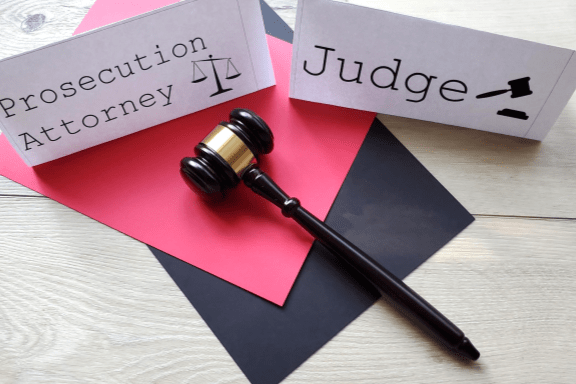
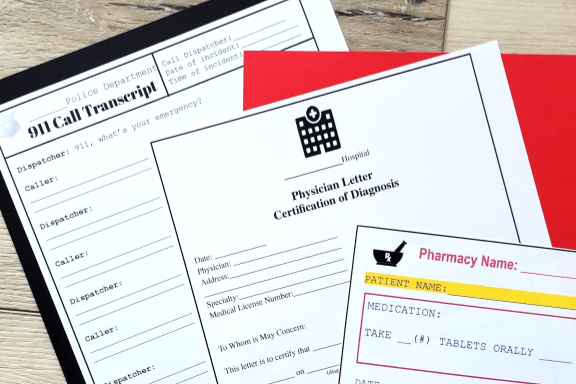
Poe’s classic tale of guilt and madness never fails to captivate students. It’s short, dramatic, and packed with suspense—making it perfect for close reading. In the classroom, this story is a goldmine for discussing unreliable narrators, symbolism, and mood. You can tie in figurative language analysis with Poe’s repeated imagery of the heartbeat! I always use this story to teach argumentative writing and debate as well, and students love debating whether the narrator is insane. End your unit with the perfect mock trial, always a memorable student activity! Get it with the mock trial evidence materials as well, and have students recreate a 911 phone call log, doctor diagnosis, and more!
2. The Monkey’s Paw by W.W. Jacobs
The Monkey’s Paw by W.W. Jacobs is a wonderfully eerie tale that never fails to spark discussion. Students are always fascinated (and a little horrified) by the consequences of the family’s wishes, making it a perfect text for exploring theme, foreshadowing, and cause-and-effect in plot. It also opens the door to conversations about fate, free will, and the dangers of greed.
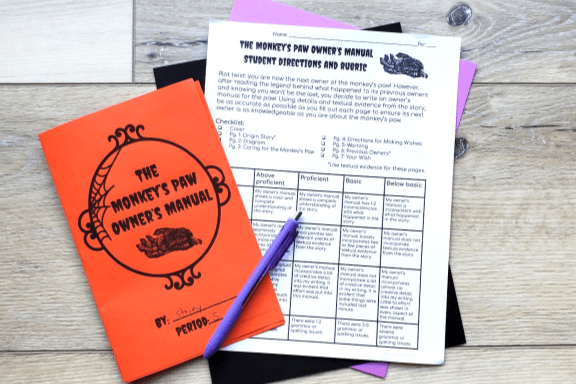
To deepen comprehension, you can extend the lesson with an Owner’s Manual activity, where students create a handbook for the paw itself. This resource encourages them to think critically about the story’s warnings, apply their understanding of symbolism, and flex their creative muscles while reinforcing key literary concepts.
3. The Landlady by Roald Dahl
The Landlady by Roald Dahl is darkly delightful—its creeping unease and twisty hints make students lean in, curious and uneasy all at once. This story is a great vehicle for teaching irony, foreshadowing, mood, and characterization through subtle clues. Dahl gives readers “red flags” (odd details the narrator ignores) that build suspense and invite inference.
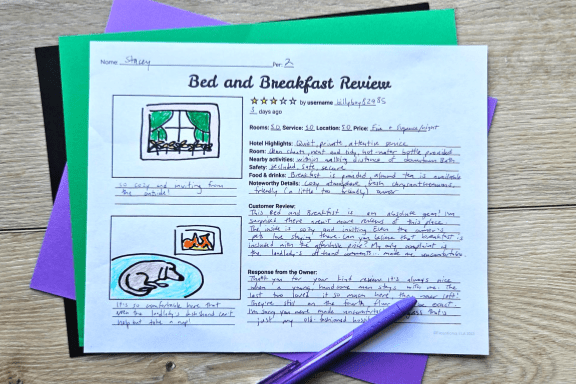
‘To bring the text into writing practice, you can use the Bed and Breakfast Hotel Review Writing Activity. Students take on the role of a critic writing a guest review of the landlady’s lodging, drawing on details, tone, and character evidence from the story. This activity invites them to think about how setting, diction, and implication work together to create the sinister tone, all while reinforcing how to use textual evidence and author’s purpose in their own writing.
4. The Most Dangerous Game by Richard Connell
The Most Dangerous Game by Richard Connell is suspense at its sharpest: it drops students into a deadly hunt and forces them to question the line between hunter and prey. The tension makes it ideal for exploring conflict (man vs. man, man vs. nature, man vs. self), pacing, and characterization under pressure. Setting plays a huge role here, too—the island becomes a character in itself, shaping the action and suspense.
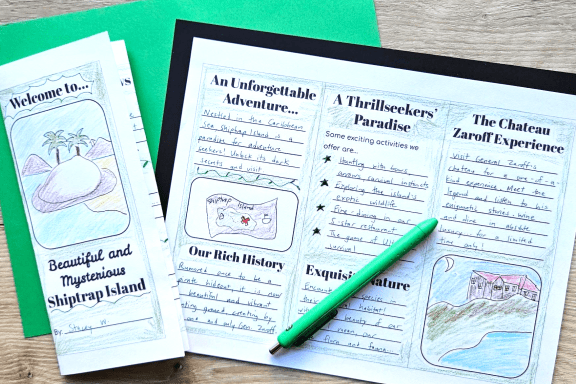
To bring the story into student creation, you can use the Travel Brochure Writing Activity. Assign students the task of designing a promotional brochure for the island, complete with vivid descriptive language and constraints inspired by the plot. This bridges analysis and creativity: students will need to think about how setting influences mood, select which details to highlight (and which to hint at), and revisit diction and persuasive techniques. It’s a great way to make students step inside the story world—and think critically about how story elements combine to build tension and meaning.
5. Create Your Own with Roll a Ghost Story
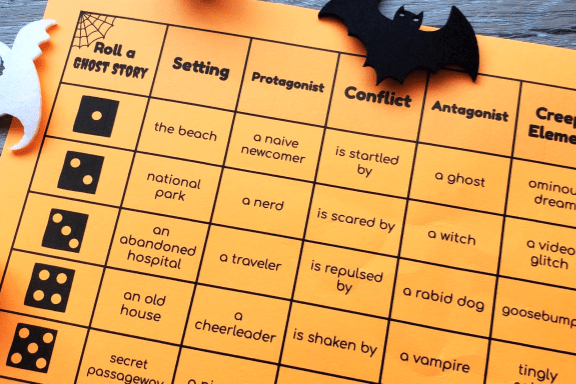
For a hands-on spooky twist, let students step into the writer’s chair! Using the Roll a Ghost Story activity, they’ll roll dice to generate characters, settings, and plot twists before drafting their own chilling tales. This activity reinforces narrative structure, descriptive language, and creativity, while giving students a sense of ownership. They absolutely love to share their finished ghost stories with the class and with each other. Turn off the lights and give everyone flashlights for extra flair. This activity is also flexible—use it as a one-day writing sprint or as the foundation for longer, polished stories.
Spooky season is more than just fun—it’s a chance to get students excited about literature and writing. These stories highlight everything from irony to symbolism, conflict to characterization, while giving students opportunities to think critically and creatively. Any of these choices will help you strike a perfect balance between rigorous analysis and imaginative play.
So pull out your pumpkin decorations, dim the classroom lights, and dive into these spooky tales. Your students will be hooked long after the last page. 🎃
Happy October!
Stacey
 ©Exceptional ELA